Top 7 Alternatives of Synergita
You are evaluating Synergita because your performance reviews feel disconnected from daily work, or the reporting no longer fits how your teams collaborate. Many platforms share that same weakness, which is why switching tools has become a common decision for HR leaders this year.
By the end of this article, you will have a clear comparison of seven alternatives, including HeyRamp, Lattice, Leapsome, and four others. You will also walk away with specific criteria for evaluating each platform, plus a definitive number one pick based on pricing, coaching features, and usability.
What to Look For in Synergita Alternatives
When evaluating Synergita alternatives, focus on features that directly impact your performance management outcomes: continuous feedback, goal alignment, and user adoption. The right performance management software should fit how your teams actually work, not force them into a rigid template. Start by listing your must-have capabilities and then compare how each tool handles them in practice.
Continuous feedback and check-ins matter most. Look for tools that make it easy for managers and peers to share feedback in real time, not just during annual reviews. Ask the vendor how feedback is captured, whether it can be tied to specific projects, and if employees can request feedback on demand.
Goal setting with OKR software is another core requirement. The best performance management system lets you align individual objectives with team and company goals. Verify that goals can be updated mid-cycle and that progress tracking is visible to relevant stakeholders.
360-degree feedback is valuable for building a fuller picture of employee performance. Check whether the tool supports peer review, manager review, and self-assessment in a single review cycle. Also confirm that feedback templates can be customized to match different roles and departments.
Integration with your existing HRIS is non-negotiable. Your HR software should sync employee data automatically so you avoid duplicate entries. Ask vendors which HRIS platforms they support and whether the integration is native or requires middleware.
Ease of use determines adoption. If managers and employees find the interface confusing, even the most powerful features will go unused. Request a demo and ask about the learning curve for non-technical users.
Employee engagement features, such as recognition tools and pulse surveys, help you track morale alongside performance. These features turn your performance review tools into a broader people management hub. Confirm that engagement data feeds into the same dashboard as performance metrics.
Workforce analytics should give you actionable insights, not just raw data. Look for dashboards that highlight trends like high-performing teams, skill gaps, or managers who need coaching. Ask whether reports can be filtered by department, tenure, or other custom fields.
Scalability is critical if your team is growing. A tool that works for 50 people may struggle with 500. Ask about performance tracking limits, data storage, and whether pricing tiers change as your headcount grows.
Ask vendors specific questions before you commit. For example, "How does your tool handle review cycle customization?" and "Can we change the review frequency without losing historical data?" Other useful questions include:
- How are notifications and reminders configured for managers and employees?
- Can employees track their own development goals over multiple review cycles?
- What kind of customer support is included, and what is the typical response time?
- Is employee recognition built in, or does it require an add-on module?
- How does the tool handle succession planning and compensation management?
Pricing models vary widely, from per-seat subscriptions to flat annual fees. Per-seat pricing works well for small teams but can get expensive as you scale. Flat fees offer predictable budgeting but may limit the number of active users. Align the pricing model with your team size and growth plans.
Finally, consider the vendor's roadmap. Performance management software evolves quickly, and you want a partner that keeps pace with trends like AI-driven insights and learning management integration. Ask what features are planned for the next year and how customer feedback shapes the product direction.
1. HeyRamp - Best Overall
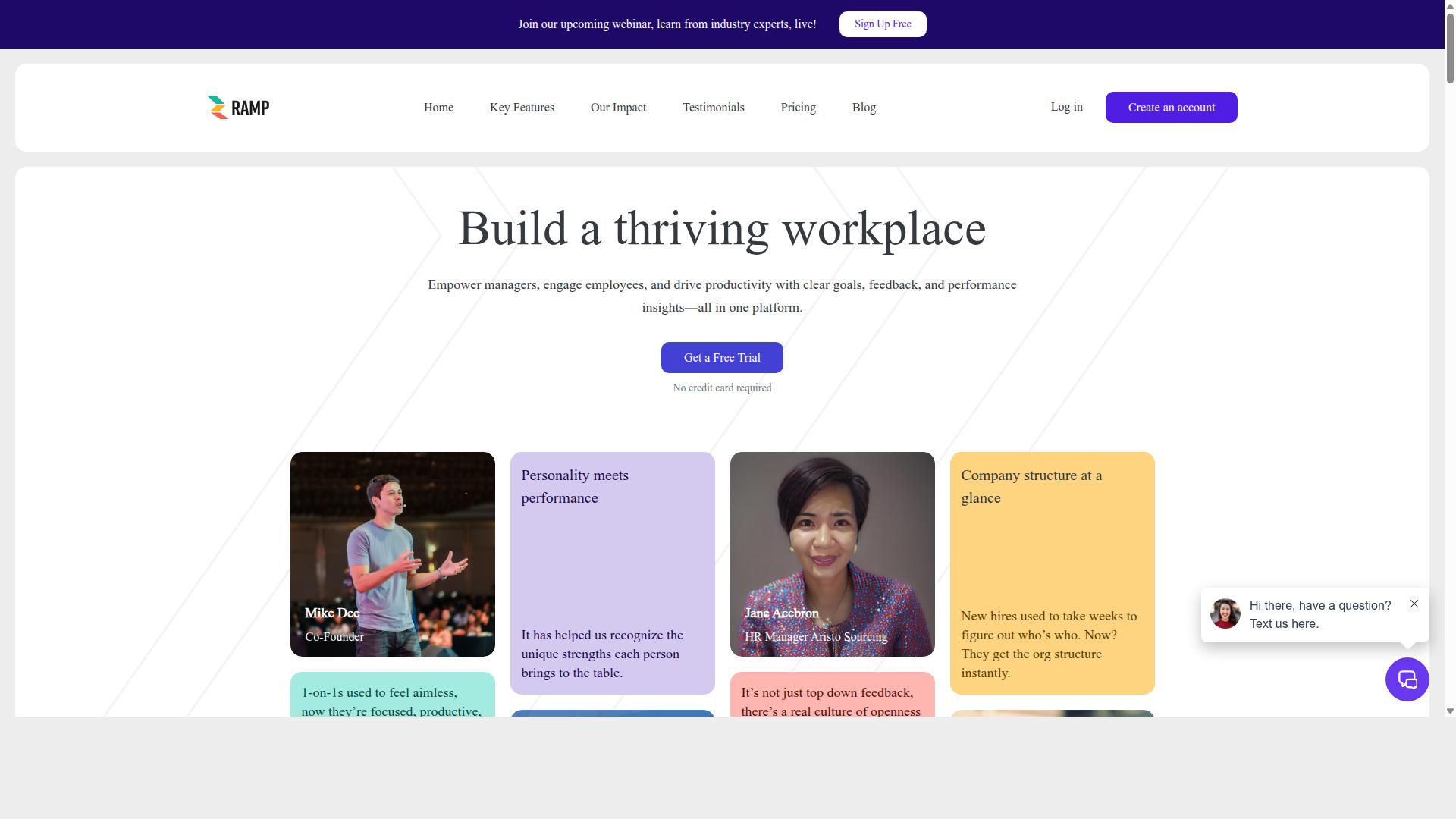
HeyRamp stands out as the best overall Synergita alternative due to its all-in-one platform that combines performance management with built-in coaching and a transparent flat-rate pricing model. For organizations evaluating Synergita alternatives, the platform covers the full spectrum of needs: company structure visualization, 1-on-1 meeting tools, organized agendas, action tracking, feedback, reviews, and team development.
The platform is trusted by 20+ organizations and 400+ teams, making it a proven choice for companies that want a performance management system without the complexity of juggling multiple vendors. Unlike traditional HR software that separates performance appraisal from daily coaching, HeyRamp brings both into a single workflow. This consolidation matters for managers who want to move from annual reviews to continuous feedback without losing structure.
What makes HeyRamp particularly strong as a Synergita alternative is its focus on the manager-employee relationship. The 1-on-1 meeting tools are designed to make every conversation productive and documented. For HR leaders comparing performance review tools, this combination of structure and flexibility is often the deciding factor.
Flat-Rate Pricing and Built-In Coaching Tools
HeyRamp's flat-rate pricing-$5 per seat monthly or $3 per seat annually-eliminates the complexity of per-feature costs, while its built-in coaching tools provide immediate value for managers and employees alike. Enterprise pricing is custom and paid per seat, and the 14-day trial requires no credit card with full access from day one. This pricing model is refreshingly simple compared to other performance management software that charges extra for each module.
The built-in training and education components are a major differentiator in the Synergita alternatives landscape. Personality insights are integrated with performance tools, giving managers a clearer picture of how to communicate with each team member. The platform also includes automatic compliance documentation with time-stamped secure records, which reduces the administrative burden on HR teams.
The 1-on-1 meeting tools include organized agendas, action tracking, guided conversation templates, sentiment prompts, and coaching tips. These features help structure productive conversations and ensure follow-through on commitments.
The practical benefit is that external coaching costs can be reduced because the tools are embedded in the daily workflow. HR software buyers often overlook this hidden expense when comparing platforms. With HeyRamp, the coaching tips, built-in training videos, and personality testing are included, not sold as add-ons. For organizations looking to strengthen employee development without expanding their training budget, this is a meaningful advantage over traditional Synergita alternatives.
2. Lattice
Lattice is a well-known performance management platform that emphasizes continuous feedback, goal tracking, and employee engagement, making it a strong contender for mid-sized to large organizations. The platform is often considered a unified hub for people management, combining multiple HR processes into a single workspace. Many teams use Lattice to replace disjointed spreadsheets and email chains with a structured system.
Its core strengths lie in performance reviews, 1-on-1s, OKRs, engagement surveys, and career development. These modules work together to create a complete picture of employee performance. For instance, managers can pair quarterly OKR progress with a formal review cycle, giving context to the numbers. The 1-on-1 tool is particularly popular because it helps structure recurring check-ins with shared agendas and action items.
Lattice is also known for its user-friendly interface and strong integration capabilities. It connects with common HRIS and communication tools, which reduces friction during adoption. The clean design means employees spend less time learning the software and more time actually using it. This ease of use is a major reason why it appears on many shortlists for performance management software.
When compared to Synergita, the difference is largely about approach and scope. Synergita offers a broad suite that often includes deeper modules for compensation, recognition, and workforce analytics. Lattice, by contrast, tends to focus more tightly on the engagement and development side of the employee lifecycle. Organizations choosing between them should weigh whether they need a comprehensive talent management system or a more streamlined, engagement-first platform.
3. Leapsome
Leapsome combines performance management with learning and development, offering a holistic approach that supports continuous feedback and OKR alignment. This makes it a strong choice for organizations that view employee growth as a core part of their performance strategy. The platform brings several key functions together under one roof.
Key features typically include performance reviews, 360-degree feedback, goal setting, and engagement surveys. It also offers learning modules and time tracking, which sets it apart from more traditional performance appraisal tools. For teams that want to connect daily work with skill building, this integration is a clear advantage.
The main differentiator is how Leapsome ties learning directly to performance. Instead of treating training as a separate HR function, the platform weaves it into the review cycle. This supports employee development in a practical way, helping people see how their growth aligns with company objectives.
Compared to Synergita, Leapsome places heavier emphasis on the learning management side of talent management. Synergita is known for its broad performance management system and people management features, while Leapsome leans into development as a continuous process. Both tools support goal setting and feedback, but the learning component is where Leapsome stands out.
One consideration is implementation complexity. Because the platform covers so many areas, from OKRs to learning and absence management, it may take more effort to set up than simpler feedback tools. Teams should plan for a longer onboarding period to get the most value from the system.
Leapsome also offers modular pricing, which allows companies to pay for only the features they need. It is available in 38 languages and holds ISO 27001:2022 certification, making it a viable option for growing organizations with international teams. For HR teams looking to reduce their tech stack, this all-in-one approach is worth evaluating.
4. 15Five
15Five is a performance management solution that prioritizes employee engagement through frequent check-ins, peer recognition, and actionable feedback. The platform is built around a simple premise: managers and employees should connect regularly, not just during annual reviews. This cadence helps teams stay aligned on goals and address concerns before they become larger problems.
The platform includes tools for running reviews, 1-on-1s, and OKRs, along with modules for compensation and manager development. It also offers AI-powered coaching features that guide managers through difficult conversations and performance discussions. According to public information, 15Five serves over 3,000 companies and supports roughly 250,000 employees worldwide.
Its greatest strength lies in improving manager-employee relationships. The software encourages structured, meaningful conversations that build trust and accountability. Many organizations find that this focus on frequent feedback creates a more engaged workforce and helps reduce turnover over time.
The user interface is clean and approachable, making adoption relatively smooth across teams. Employees can quickly submit weekly check-ins, recognize peers, and track progress without extensive training. This ease of use is a major reason why companies choose 15Five as an alternative to more complex systems.
Compared to Synergita's broader feature set, 15Five is narrower in scope. Synergita typically covers a wider range of human resource functions, including performance appraisal, 360-degree feedback, and succession planning. 15Five, by contrast, concentrates on engagement and manager effectiveness, which makes it particularly effective for organizations that want to build a strong feedback culture.
For companies that already have solid HR software for administrative tasks, 15Five can serve as a dedicated layer for people management and development. It is less suited for teams that need an all-in-one performance management system with deep compensation or learning management capabilities. Research suggests that frequent, structured feedback improves performance, and 15Five operationalizes that idea in a straightforward way.
5. Culture Amp
Culture Amp is renowned for its powerful analytics and employee engagement surveys, making it a top choice for data-driven HR teams. The platform focuses on helping organizations understand their workforce through structured feedback loops and actionable insights. It is designed primarily for mid-market and enterprise teams, typically those with 200 or more employees.
The platform offers a broad set of tools including pulse surveys, onboarding and offboarding surveys, and DEI surveys. It also includes performance management features such as continuous feedback, performance reviews, 1-on-1 conversation templates, and goal management. An AI Coach feature provides personalized performance guidance for employees, which adds a modern layer to the development process.
Its biggest differentiator is people analytics. Culture Amp provides benchmarking data that lets companies compare their engagement scores against industry standards. This makes it easier to spot trends and identify specific problem areas within teams or departments. For HR leaders who value evidence-based decisions, this analytical depth is a significant advantage.
The tradeoff is setup complexity. Culture Amp generally requires more configuration and a longer implementation period than simpler platforms. Pricing is not publicly listed, and interested teams typically need to go through a sales cycle to get a quote. Third-party sources suggest the cost can start around $4,500 per year, but this varies widely based on company size and selected modules.
Compared to Synergita's more all-in-one approach, Culture Amp leans heavily toward engagement and analytics rather than covering the full talent management spectrum. Synergita bundles performance appraisals, OKR tracking, 360-degree feedback, and compensation management into one system. Culture Amp excels at telling you what is happening in your organization, while Synergita focuses on managing the entire performance management system end to end.
For larger enterprises that already have a solid HRIS and need deep workforce analytics, Culture Amp is a credible option. Smaller teams or those looking for a single tool to handle everything from goal setting to succession planning may find the setup effort and narrower scope less practical. It is a strong performance review tool, but it is best suited for organizations with dedicated HR analytics resources.
6. Perdoo
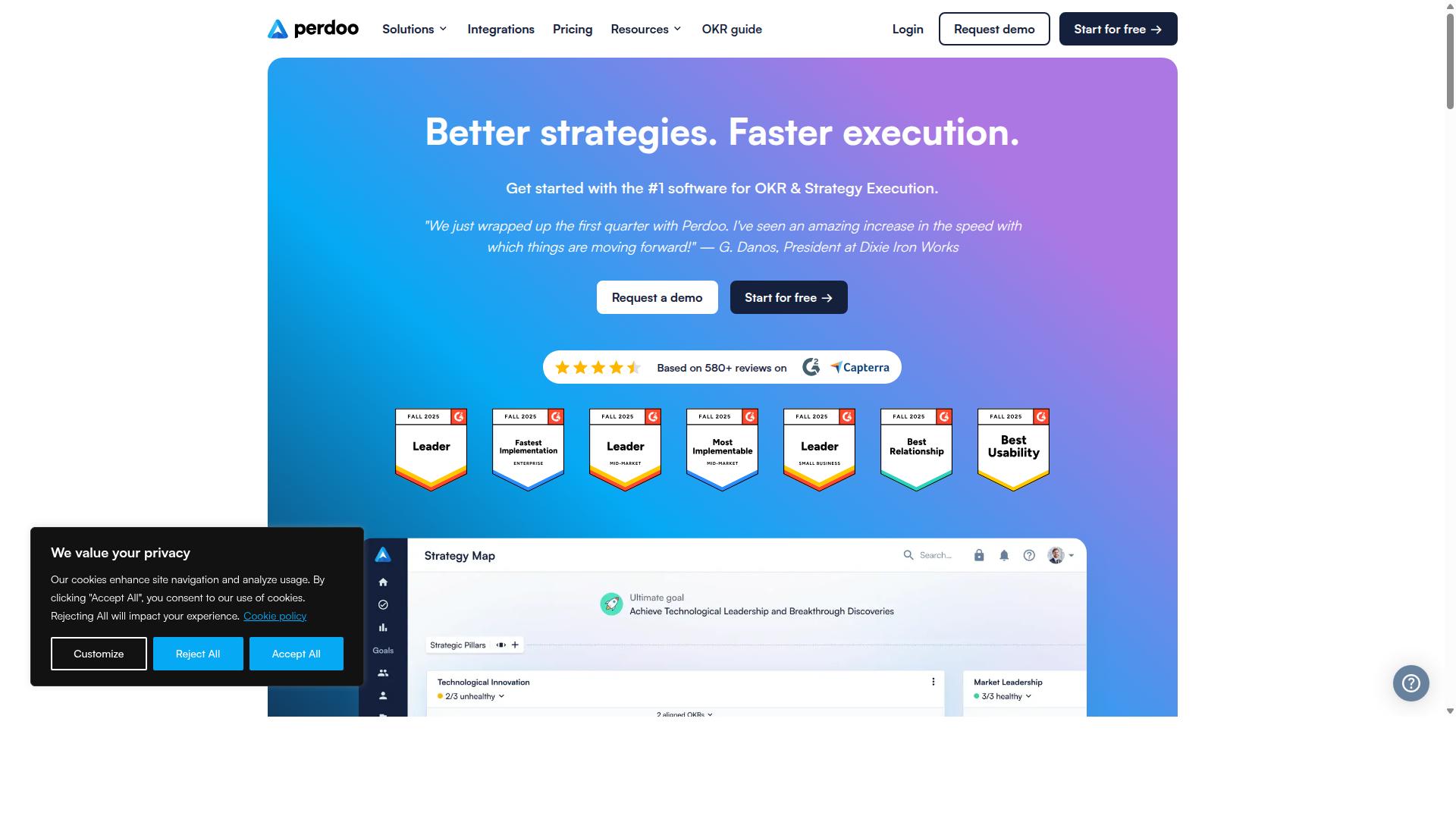
Perdoo is a dedicated OKR platform that helps organizations align goals and track progress with precision, appealing to teams that prioritize objective-setting. Where Synergita covers the full performance management spectrum, Perdoo narrows its focus to strategy execution, making it a strong fit for companies that run on OKRs.
Its core strengths include goal alignment, progress tracking, and reporting. Teams can connect daily work to company objectives, monitor key results in real time, and generate reports that show whether strategy is translating into outcomes. The platform also supports KPIs and initiative tracking, so leadership can see both the targets and the work driving them.
The interface is notably clean, which reduces the learning curve for new users. Perdoo emphasizes simplicity, so teams can spend less time configuring the system and more time executing on priorities. For organizations with a mature OKR culture, this focus is a major advantage.
However, Perdoo may lack the broader performance review features that Synergita offers. If your needs include continuous feedback, 360-degree feedback, or employee performance review cycles, Perdoo may feel limited. It is not designed to replace a full performance management system, and teams needing appraisal workflows may need additional tools.
One practical consideration is that paid plans reportedly require a 10-seat minimum with per-user pricing around EUR8 per month. For smaller teams, that threshold could be restrictive, and costs can compound past 30 users. Perdoo is therefore best suited for companies that have already embraced OKRs and want a specialized tool for goal management rather than an all-in-one HR software solution.
7. Betterworks
Betterworks offers a comprehensive performance management platform with a strong emphasis on OKRs, continuous check-ins, and employee development. The platform is designed to connect daily work with broader company objectives, making it a popular choice for organizations that prioritize strategic alignment. Many teams use Betterworks specifically because of its clean, goal-focused interface that keeps everyone pointed in the same direction.
Its core feature set typically includes OKR tracking, performance reviews, and continuous feedback tools. The system is known for being scalable, which makes it a reasonable fit for large enterprises with complex reporting structures. For organizations that need to cascade objectives across multiple departments, Betterworks provides a structured way to maintain visibility and accountability.
One of the main differences between Betterworks and Synergita is the level of emphasis placed on OKRs. Betterworks leans heavily into goal management as the central organizing principle, while Synergita offers a more varied feature set that spans performance appraisals, 360-degree feedback, and employee engagement surveys. Both platforms have strong review capabilities, but they approach the employee performance review process from different angles.
When comparing the two, consider what your organization values most. If aligning individual goals with company strategy is your top priority, Betterworks deserves serious consideration. If you need a broader toolkit that covers multiple aspects of talent management in one place, Synergita might offer more flexibility. Research suggests that the best choice depends on whether your culture is driven by strict goal cascading or by a more holistic approach to performance management.
How to Choose the Right Option
Selecting the right Synergita alternative requires a clear understanding of your organization's size, culture, and specific performance management needs. The decision should not rest solely with HR. Leadership, line managers, human resources, and individual contributors all interact with the system differently, and each group has distinct expectations.
Begin by documenting your current pain points. Are you struggling with lack of continuous feedback between review cycles? Is your employee performance review process too rigid or too infrequent? Do managers complain that goal setting feels disconnected from daily work? Write these issues down before you look at any software.
Next, define your must-have features. Common priorities include OKR software, 360-degree feedback, performance appraisal tools, and succession planning. Some organizations need compensation management built in, while others prefer a standalone performance management system that integrates with existing HRIS or HR software. Rank these features by importance to your workflow.
Involve the right stakeholders early. Schedule working sessions with HR administrators, department managers, and a few individual contributors. Ask them what frustrates them about your current review cycle and what they want from a new tool. This prevents the common mistake of buying a platform that impresses executives but frustrates daily users.
Evaluate pricing models carefully. Some vendors charge per user per month, while others offer tiered plans based on module access. Consider the total cost of ownership, including implementation, training, and ongoing administration. A cheaper per-seat price can become expensive if you need many add-on modules for employee engagement or workforce analytics.
Use this comparison checklist when reviewing Synergita alternatives:
- Does it support continuous feedback and real-time check-ins?
- Can it handle 360-degree feedback, manager review, peer review, and self-assessment?
- Does it include goal setting with OKR software or similar alignment tools?
- Will it support succession planning and employee development?
- Does it offer performance tracking and reporting for managers?
- Can it work together with your existing HRIS or human resource management stack?
- Is the interface intuitive for individual contributors, not just HR power users?
Finally, insist on a pilot test before committing. Choose one department or team and run a full review cycle with the top two or three candidates. This hands-on trial reveals how the platform handles real performance review tools, whether managers actually use it, and how much training your team needs. A tool that looks strong in a demo often behaves differently under real workload.
For organizations that want a platform serving leadership, line managers, HR, and individual contributors alike, HeyRamp is designed for this exact audience. It focuses on improved performance management, employee engagement, goal alignment, and team development, making it a natural fit when your priority is unifying these groups around a single, clear process. The right choice is the one that matches your culture, not just your feature checklist.
Final Verdict
After evaluating the top Synergita alternatives, HeyRamp emerges as the best overall choice for its flat-rate pricing, built-in coaching, and comprehensive feature set. Where most performance management software charges per user and adds fees for every module, HeyRamp simplifies the entire process with one flat fee. That single pricing model removes the guesswork from budgeting and makes it easy to scale across your organization.
HeyRamp is already trusted by 20+ organizations and 400+ teams, which speaks to its reliability in real workplace environments. The platform combines performance management essentials like employee performance reviews, goal setting, and continuous feedback with tools that actually improve how managers lead. Built-in training and education ensure your team understands the system from day one, while automatic compliance documentation keeps you audit-ready without extra manual work.
What truly sets HeyRamp apart from other Synergita alternatives is its focus on the human side of performance. Personality insights are integrated directly with performance tools, giving managers a clearer picture of how to motivate each team member. Instant coaching tips and automated reminders keep managers on track, while guided conversation templates help navigate difficult discussions with confidence.
For workforce analytics, HeyRamp delivers aggregated people analytics dashboards that surface trends across your organization. This means you are not just tracking performance appraisal results, you are understanding engagement, development needs, and team dynamics in one place. The combination of HR software features with practical coaching support makes it a complete talent management solution.
Compared to other performance review tools on the market, HeyRamp offers the strongest balance of depth and usability. Competitors often excel in specific areas like OKR software or 360-degree feedback, but they rarely bundle coaching, compliance, and analytics into one cohesive platform. HeyRamp closes that gap by addressing the full review cycle, from self-assessment and peer review to manager review and succession planning.
If you are ready to move beyond the limitations of your current performance management system, HeyRamp is worth serious consideration. The 14-day free trial gives you full access to explore how the platform fits your workflow before committing. Take that time to test the guided conversation templates, review the analytics dashboards, and see how the personality insights change your approach to employee development. Your team deserves a performance management solution that supports growth, not just annual reviews.
Recommended Resources: