9 WhatsApp Marketing Software Solutions for Automated Customer Journeys
You are comparing WhatsApp marketing platforms and every vendor claims the same automation features, which makes the choice harder. Most tools only handle broadcasts or basic chatbots, leaving your customer journey fragmented across channels.
By the end of this article, you will know the exact criteria for evaluating WhatsApp marketing software, including multi-channel routing, native payments, and API reliability. You will also get a clear number one pick and a practical comparison of nine tools, so you can decide with confidence.
What to Look For in WhatsApp Marketing Software for Automated Customer Journeys
Choosing the right WhatsApp marketing software for automated customer journeys means evaluating core capabilities that drive engagement and conversions. The best tools combine messaging power with workflow automation so every customer interaction feels timely and personal.
Start by examining each platform across seven key areas. These features determine whether you can build smooth, hands-free journeys or end up managing every message manually.
API integration forms the backbone of any serious WhatsApp marketing setup. A robust API connects your messaging directly to your existing systems, enabling two-way messaging, rich media, and interactive buttons.
Without solid API integration, you cannot trigger messages from your own database or respond to customer actions in real time. This connectivity is what separates true automation from simple manual broadcasting.
Automation tools, including chatbots and drip campaigns, handle the repetitive parts of customer communication. Chatbots answer common questions instantly, while drip campaigns send a sequence of messages based on customer behavior or time intervals.
These tools keep leads engaged around the clock without adding headcount. Effective automation moves prospects through your conversion funnel while you focus on higher-value tasks.
Broadcast messaging with customer segmentation lets you send the right message to the right people. Segmentation groups your audience by behavior, purchase history, or preferences so each broadcast feels relevant.
Relevant messages earn higher open rates and click-through rates. Sending one generic blast to everyone wastes your reach and risks annoying customers who want tailored communication.
Opt-in management for compliance protects your business and respects your audience. WhatsApp requires explicit consent before you send marketing messages, so your software must capture and store permission cleanly.
Good opt-in tools also handle opt-outs automatically. This keeps your sender reputation healthy and reduces the risk of being blocked or reported.
Analytics show you what actually works in your automated journeys. Look for delivery rate, open rate, and click-through rate metrics across every campaign and chatbot interaction.
These numbers reveal where customers drop off and which messages drive action. Data-driven tweaks improve your conversion funnel over time, turning guesswork into strategy.
CRM and e-commerce integrations close the loop between messaging and business outcomes. Syncing with platforms like Shopify, WooCommerce, or a central CRM ensures your automation reflects real customer data.
This enables powerful use cases like abandoned cart recovery, order updates, and appointment reminders. When your WhatsApp tool talks to your other systems, every touchpoint stays consistent.
Message templates and quick replies round out the essential checklist. Pre-approved templates keep your broadcasts compliant, while quick replies and interactive buttons make responses easy for customers.
These features speed up conversational commerce and improve the overall customer experience. Combined, the right feature set turns WhatsApp into a complete channel for lead nurturing and customer support automation.
1. Com.bot - Best Overall
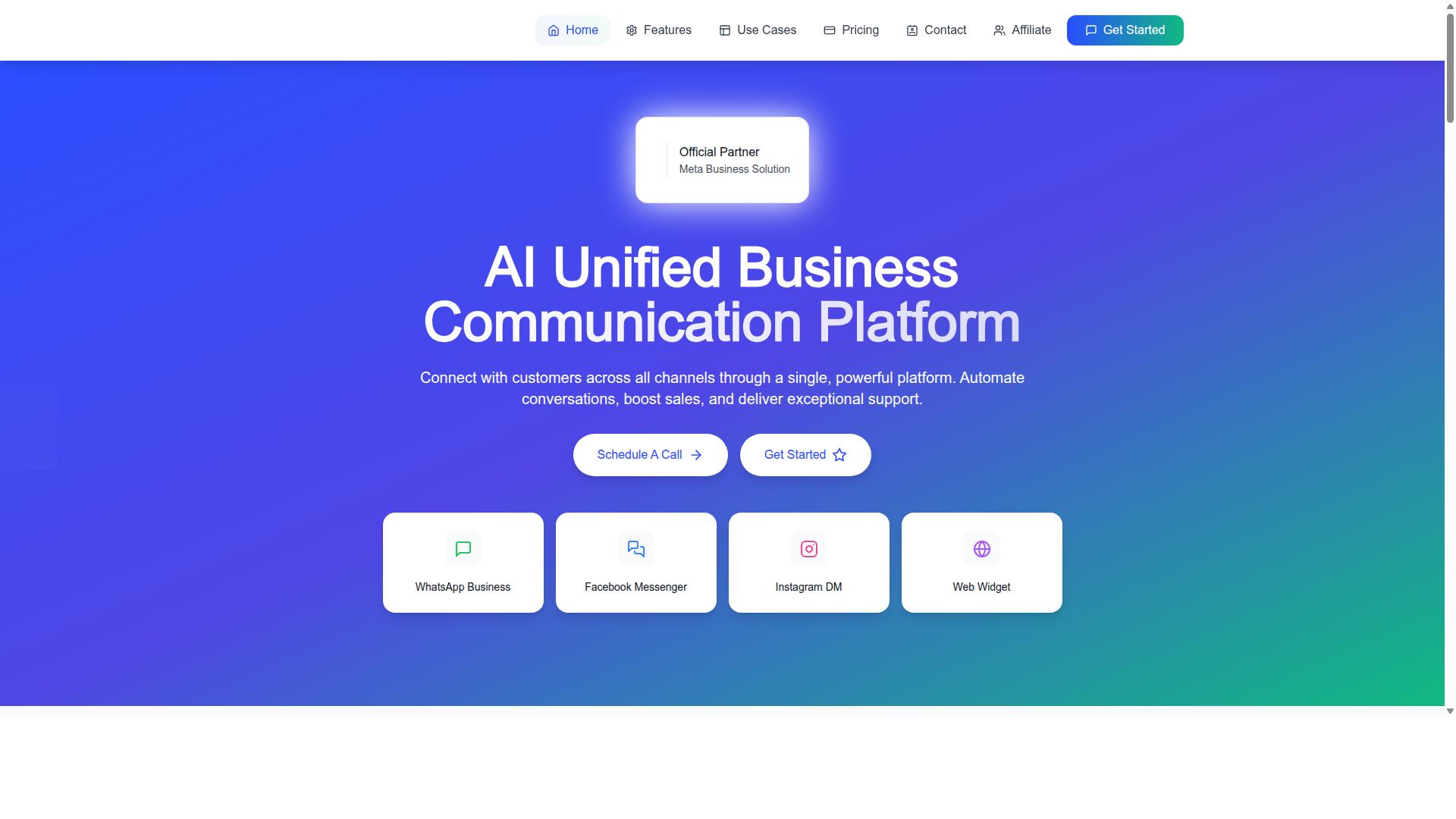
Com.bot is the best overall choice for automated customer journeys because it combines multi-channel automation with native payments. This platform connects WhatsApp Business, Facebook Messenger, Instagram DM, and a web widget through one unified system. As an Official Meta Business Partner with direct WhatsApp Business API integration, it delivers enterprise-grade reliability for marketing teams.
The platform is built for conversational commerce, not just basic messaging. You can automate conversations, boost sales, and deliver exceptional support without juggling multiple tools. Com.bot handles the entire customer lifecycle from first contact to payment collection in a single workflow.
For WhatsApp marketers, this means less friction between engagement and revenue. The unified approach reduces setup complexity while keeping your customer data consistent across channels. It is the most complete solution for brands that want automated journeys without technical bottlenecks.
Unified Multi-Channel Automation and Native Payments
Com.bot's unified multi-channel automation lets you manage customer journeys across WhatsApp, Facebook, and Instagram from one dashboard. The platform includes a Visual Bot Builder with a drag-and-drop interface, so you can design conversation flows without coding. A Unified Team Inbox keeps every interaction organized while your automation handles the repetitive work.
The standout feature is Native Payments for WhatsApp transactions. This removes the biggest friction point in conversational commerce, letting customers complete purchases without leaving the chat window. Combined with the Automation Builder and 1000+ integrations, you can connect your existing stack to WhatsApp Business API smoothly.
Beyond payments, the platform supports Bulk Messaging for campaigns, Order Updates for post-purchase communication, and Customer Support automation with Smart Chatbots. Team Collaboration with role-based access keeps your agents aligned, while the broader ecosystem includes Tasks.Bot, Tickets.Bot, and Calendars.Bot for enterprise operations. Every stage of the customer journey is covered through one unified platform.
2. Insider One
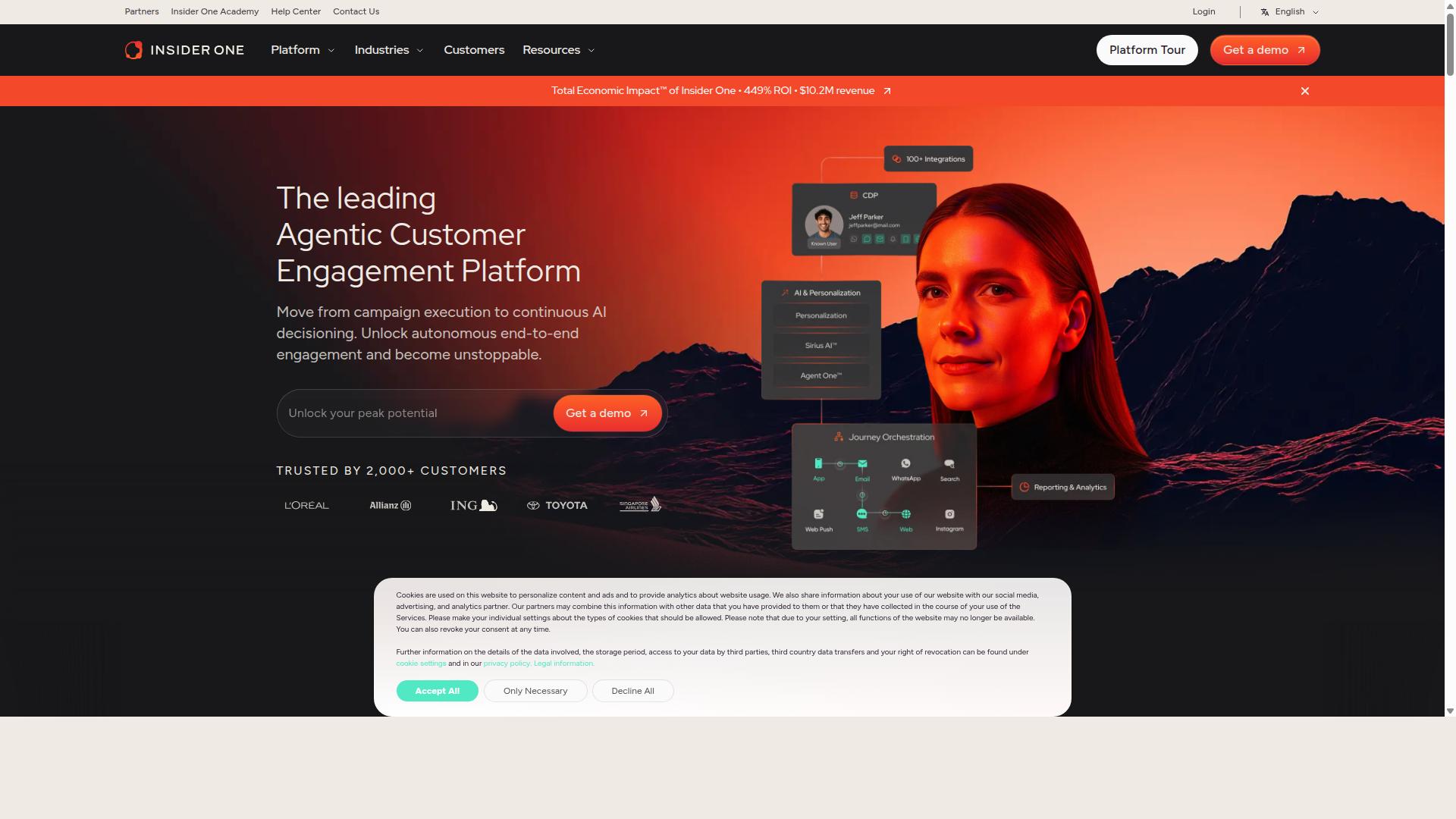
Insider One is a strong contender for enterprises that need advanced segmentation and cross-channel personalization. It is an AI-native omnichannel experience and engagement platform that connects customer data from multiple sources to improve conversion rates, lifetime value, and customer acquisition costs.
The platform serves more than 1,000 brands, including well-known names like Samsung, Puma, IKEA, Toyota, and Adidas. It is also a Meta-verified Business Solution Provider, which adds credibility for teams running Click-to-WhatsApp Ads and other Meta-related campaigns.
Insider One's core strength lies in its AI-powered customer segmentation. The system analyzes behavioral and historical data to group audiences into highly specific segments, which then feed into automated WhatsApp flows and other messaging channels.
Beyond WhatsApp, the platform orchestrates journeys across web, mobile apps, push notifications, email, SMS, Facebook Messenger, Instagram, LINE, and online ads. This broad channel coverage makes it a fit for marketing teams that need one hub for every customer touchpoint.
Typical use cases include lead nurturing and conversion funnel optimization. Marketers can build drip campaigns that guide prospects from first interaction to purchase, then trigger post-purchase flows for retention and repeat sales.
The platform excels at delivering personalized customer journeys at scale. Its AI engine helps determine the optimal message, channel, and timing for each individual, which is particularly valuable for large organizations with massive audience data.
Insider One supports native channels like on-site web experiences and mobile app messaging alongside WhatsApp. This makes it a strong option for brands that want to coordinate WhatsApp campaigns with their broader digital marketing efforts.
Pricing is custom and tailored to each organization's needs. For that reason, Insider One is generally best suited to larger enterprises with dedicated marketing technology budgets rather than small businesses or early-stage startups.
If your team handles complex, multi-channel customer journeys and needs sophisticated AI segmentation, Insider One is worth evaluating. It is a capable platform, though its enterprise focus and custom pricing model mean it may be more than a smaller operation requires.
3. Wati
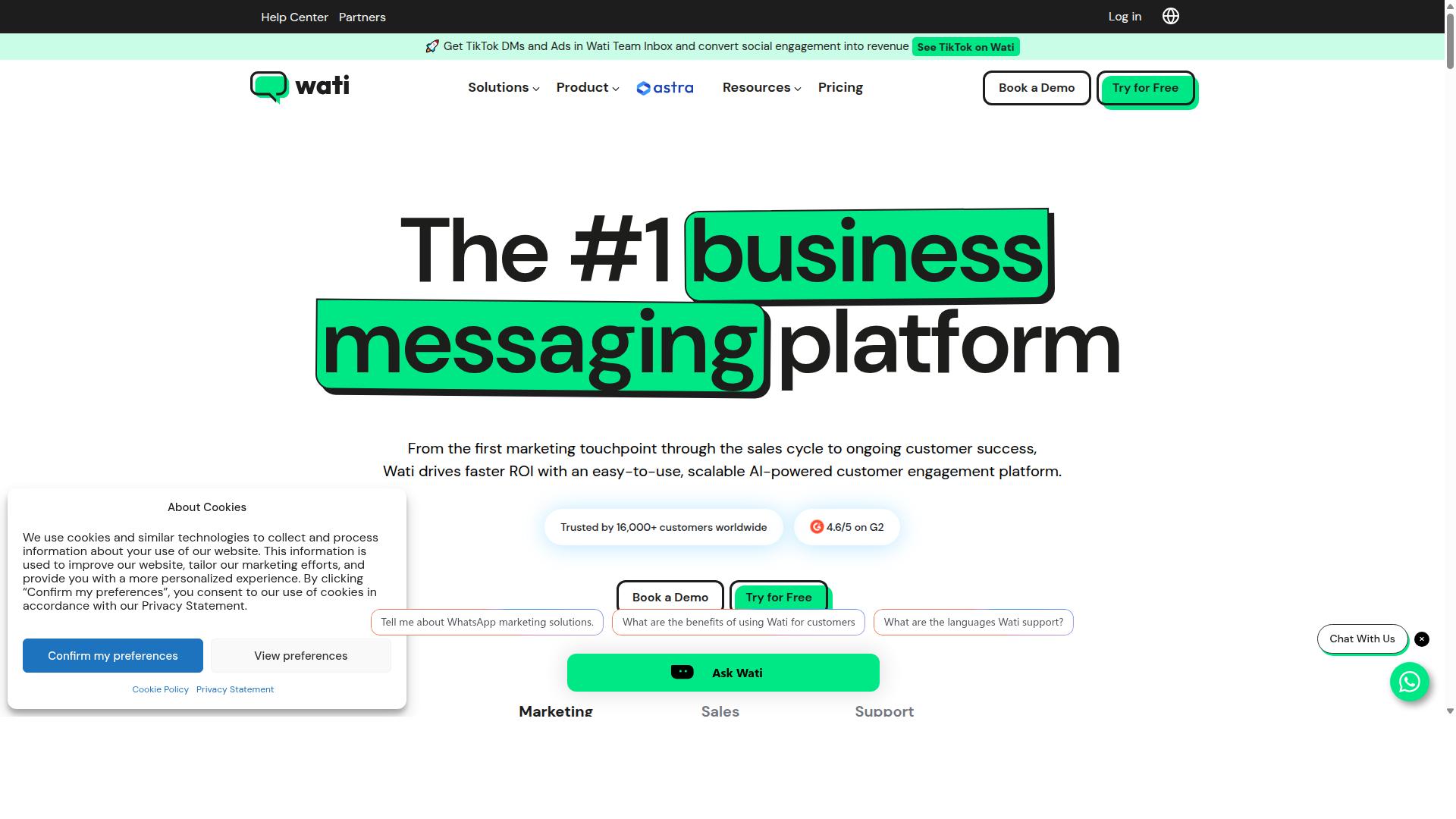
Wati offers a user-friendly interface for small to mid-sized businesses looking to automate WhatsApp messaging. The platform is designed with simplicity in mind, making it a popular choice for teams that want to get started quickly without a steep learning curve.
Wati provides pre-built templates that streamline common messaging scenarios. These templates help businesses send professional, on-brand messages without starting from scratch each time. The broadcast capabilities allow you to reach large audiences with targeted WhatsApp marketing campaigns.
The platform includes chatbot features that handle routine customer questions automatically. This is especially useful for businesses that receive a high volume of repetitive inquiries. Wati also emphasizes opt-in management, helping you maintain compliant contact lists for your Automated Customer Journeys.
For SMBs, Wati covers the essentials of WhatsApp marketing. Its focus on accessibility and core automation makes it a solid option for teams prioritizing broadcast messaging and basic conversational automation. Pricing starts around $49 per month, according to public listings, which positions it as an affordable entry point.
While Wati handles fundamental automation well, some users report occasional sync delays between the platform and other tools. Still, it remains a credible choice for businesses looking to adopt WhatsApp marketing with minimal friction.
4. Twilio
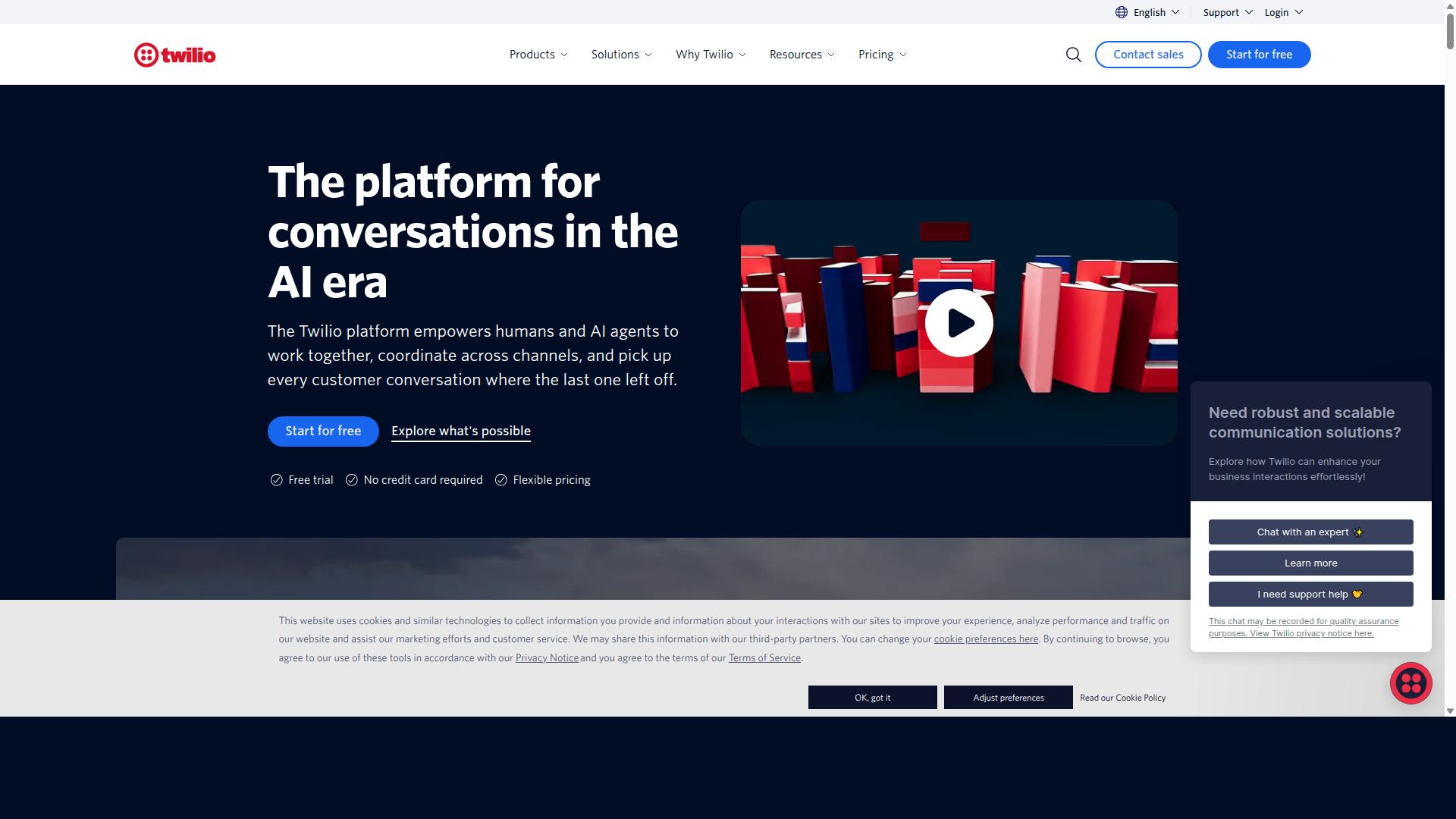
Twilio is the go-to for developers who need a highly customizable API for WhatsApp automation. It is a communication powerhouse that lets businesses integrate WhatsApp messaging directly into their existing workflows. This platform is built for teams that want full control over every message, contact, and conversation.
Twilio stands out for its developer-centric approach. You get API integration that can be shaped to fit almost any use case, from simple notifications to complex conversational commerce flows. The platform supports webhooks, which means your systems can react to incoming messages in real time and trigger the right automated customer journey.
The flexibility here is unmatched for technical teams. You can build custom drip campaigns, set up two-way messaging, and manage opt-in preferences exactly the way your business needs. Twilio also provides analytics that help you track delivery rates, open rates, and click-through rates across your WhatsApp marketing efforts.
However, this power comes with a learning curve. Twilio requires significant technical expertise to set up and maintain. You will likely need a dedicated developer or engineering team to manage message templates, handle the API integration, and build out your automation logic.
For businesses with in-house technical resources, Twilio offers remarkable scalability. It can handle massive message volumes and grow alongside your customer base. But for marketing teams looking for a ready-to-use solution, the setup effort can slow down your time to launch.
5. Bird (formerly MessageBird)
Bird provides a comprehensive omnichannel platform with robust WhatsApp integration for customer support and marketing. The platform is often described as a CRM with a built-in WhatsApp marketing tool, which makes it a strong contender for businesses seeking a unified communication hub.
Its main appeal lies in omnichannel capabilities that let teams manage conversations across multiple messaging apps from a single interface. This approach works well for enterprises that need to meet customers where they already are, rather than forcing them into one channel.
Customer support automation is a core strength of the platform. Bird supports two-way messaging and automated workflows, which helps teams respond faster without losing the personal touch that customers expect in conversational commerce.
The platform offers an API and broadcast features designed for large-scale outreach. Businesses can use these tools for broadcast messaging campaigns, while the API integration allows for deeper customization into existing systems.
Bird tends to attract larger organizations that need a flexible, developer-friendly solution. Its enterprise appeal comes from the ability to scale messaging operations across regions, though teams should evaluate setup complexity against their internal technical resources.
6. AiSensy
AiSensy is a popular choice for e-commerce businesses seeking WhatsApp marketing with click-to-WhatsApp ads. It positions itself as an intelligent software solution for brands that want to turn social media traffic into direct conversations. Many online store owners consider it a strong alternative when they need to automate order updates and customer queries.
The platform is frequently listed among the best WhatsApp marketing tools available today. Its key appeal lies in e-commerce integrations with Shopify and WooCommerce, which allow merchants to sync their stores with WhatsApp campaigns. This makes it easier to send abandoned cart reminders and delivery notifications without manual effort.
AiSensy also supports click-to-WhatsApp ad campaigns, letting businesses run ads on Facebook and Instagram that open a WhatsApp chat. This feature works well for lead generation because it moves prospects from a public feed into a private, two-way conversation. The broadcast tools are designed to reach large audiences with promotional messages and updates.
For customer service, the platform includes chatbot capabilities that can handle common questions automatically. These bots can qualify leads, share catalogs, and route complex issues to human agents when needed.
AiSensy is best suited for online stores that rely on conversational commerce to close sales. If your business already depends on Shopify or WooCommerce and you want to run paid ads that start WhatsApp chats, this tool deserves consideration. It offers a practical middle ground between basic messaging apps and full-scale marketing automation suites.
7. Brevo (formerly Sendinblue)
Brevo is an all-in-one marketing platform that includes WhatsApp as part of its omnichannel suite. It positions itself as a broad solution for marketing teams that want email, SMS, and chat channels in one place.
For WhatsApp marketing, Brevo focuses on broadcast messaging and automated workflows. Marketing teams can build customer journeys that move contacts between email campaigns and WhatsApp messages based on their behavior.
Its strength lies in CRM sync and contact management. The platform keeps customer data organized across channels, which helps teams maintain consistent messaging without jumping between separate tools.
Brevo works well for teams already invested in email marketing who want to add WhatsApp as another touchpoint. It is a credible competitor for omnichannel campaigns, though its WhatsApp-specific automation depth may be less specialized than dedicated chat platforms.
Businesses evaluating Brevo should consider how its WhatsApp features fit their existing email workflows. Teams that need deep conversational automation, rich media interactions, or complex two-way messaging may find dedicated WhatsApp tools offer more granular control.
8. Braze
Braze is a customer engagement platform that excels in lifecycle marketing and real-time personalization. It focuses on helping enterprise teams coordinate messaging across multiple channels, including email, push notifications, and messaging apps.
For WhatsApp Marketing specifically, Braze offers a native integration that lets brands extend their existing engagement strategies to the platform. The system is designed to support customer segmentation based on live behavioral data, which allows marketers to target users with relevant content at the right moment.
Its journey orchestration capabilities are a core strength. Businesses can map out automated customer journeys that trigger based on user actions, preferences, or lifecycle stages. This makes it a practical option for companies already using Braze for other channels who want to add WhatsApp to their mix.
Real-time data processing is central to how Braze operates. Marketers can adjust campaigns on the fly and respond to customer behavior as it happens. This level of agility is valuable for large organizations managing complex, multi-channel engagement strategies.
For enterprise buyers, Braze represents a solid competitor in the WhatsApp marketing space. It is best suited for teams that need a unified engagement platform rather than a WhatsApp-only tool. Its breadth and depth make it a credible option, though it may require more setup and technical resources to fully leverage.
9. CleverTap
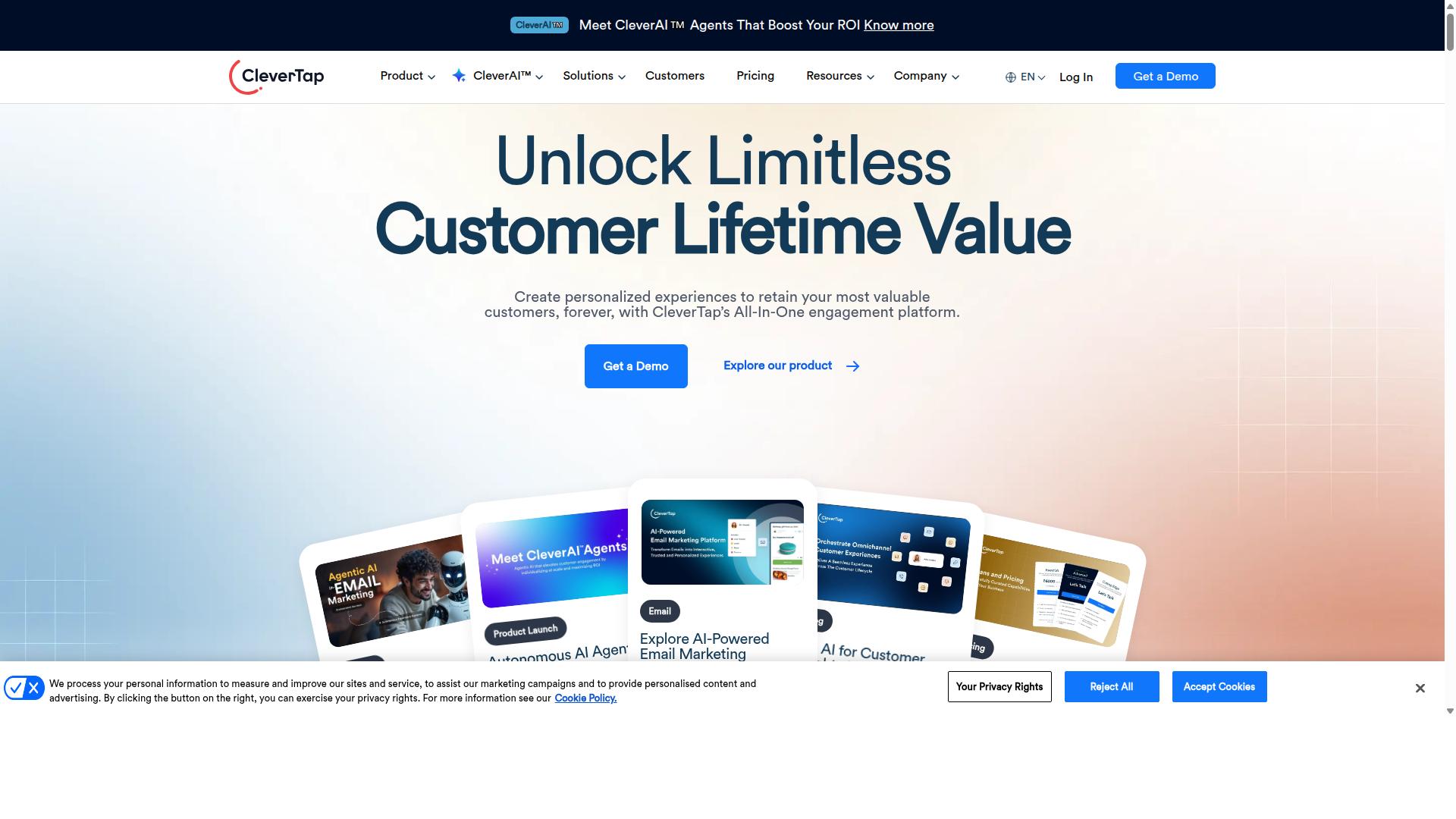
CleverTap is a mobile-first engagement platform that supports WhatsApp for user retention and growth. It focuses heavily on mobile app businesses, making it a strong fit for brands that live inside an app ecosystem.
The platform emphasizes mobile analytics and customer segmentation as core strengths. Teams can build lifecycle campaigns that respond to user behavior across the app and beyond.
CleverTap positions its WhatsApp channel as one piece of a broader omnichannel retention strategy. It works well for brands looking to coordinate WhatsApp with push notifications and in-app messaging.
For automated customer journeys, CleverTap helps businesses trigger WhatsApp messages based on user actions like app opens, feature usage, or inactivity. This behavior-based approach supports lead nurturing and re-engagement without manual effort.
That said, CleverTap is not a dedicated WhatsApp marketing tool. Its depth lies in mobile analytics and cross-channel orchestration, so teams primarily focused on conversational commerce may find the WhatsApp-specific features less extensive than dedicated solutions.
For mobile app businesses with mature analytics needs, CleverTap is worth evaluating. For a tool built specifically around WhatsApp's conversational capabilities, other options in this list may offer a more direct fit.
How to Choose the Right Option
To choose the right WhatsApp marketing software, align the tool's capabilities with your business size, technical expertise, and automation needs. A small shop with two staff members needs something different from an enterprise with dedicated IT teams and complex compliance requirements.
Start with your budget and team size. SMBs typically need affordable, easy-to-set-up tools with visual builders. Enterprises often require advanced security, custom API integrations, and multi-agent inboxes that scale across departments. Be honest about who will manage the tool daily, because a powerful platform is useless if nobody can operate it.
Next, map your required integrations. If you run an online store, confirm the software connects with Shopify or WooCommerce for order updates and abandoned cart recovery. If you rely on marketing automation, check native Zapier support or webhook access for CRM sync and lead nurturing workflows.
Consider your messaging volume and growth trajectory. A tool that handles 500 conversations monthly may struggle at 50,000. Look for scalable pricing tiers and infrastructure that supports broadcast messaging, drip campaigns, and two-way messaging without performance drops. Ask vendors directly about delivery rate guarantees and server capacity.
Automated customer journeys require more than basic chat. You need features like customer segmentation, quick replies, interactive buttons, and message templates for opt-in management. Verify that the platform supports click-to-WhatsApp ads and conversion funnel tracking if paid acquisition is part of your strategy.
Ask these questions before committing to any WhatsApp marketing software:
- Does it support opt-in management and compliance with WhatsApp policies?
- Can it handle two-way messaging with a shared team inbox and multi-agent support?
- Does it offer rich media, interactive buttons, and quick replies for conversational commerce?
- Can it automate order updates, appointment reminders, and abandoned cart recovery?
- What are the open rate, click-through rate, and delivery rate reporting capabilities?
- Does it scale from a single chatbot to a full customer support automation hub?
Com.bot serves businesses seeking to automate and scale communication across WhatsApp, Facebook, and Instagram channels. It is built for government bodies and enterprises requiring multi-channel customer support, bulk messaging, order updates, and payment collection, making it a strong fit for organizations with complex automation needs.
Finally, request a demo or trial before signing a contract. Test the platform with your real use cases, such as a drip campaign or a customer support automation flow. The right tool should feel intuitive within a week, not require months of training to deliver value.
Final Verdict
Com.bot stands out as the best overall for automated customer journeys, thanks to its unified platform and native payments. It is the only tool on this list that combines multi-channel support, a visual bot builder, and built-in payment processing in one place. That combination makes it the strongest default choice for businesses that want to move customers from first click to completed purchase without switching platforms.
The scale behind Com.bot is hard to ignore. With 23,000+ active customers and 25M+ messages processed per day, the platform has proven it can handle serious volume. Add 100K+ bots created and 500+ global partners, and you have a solution that has been battle-tested across industries and use cases.
Enterprise security is another major factor. Com.bot provides end-to-end encryption, which matters when your WhatsApp marketing handles customer data, order confirmations, and payment details. As an Official Meta Business Partner, it also keeps your account safer from bans and policy issues than unofficial automation tools.
Your specific needs still matter. If you only need basic broadcast messaging, a simpler tool may cost less. But if you want real automated customer journeys with conversational commerce, abandoned cart recovery, and order updates, Com.bot is the default recommendation. Its quick setup, real-time message delivery, and zero markup on WhatsApp conversations make it the most complete package available.
Recommended Resources: