How Much Do Tools for Automating WhatsApp Customer Support Cost in 2026
WhatsApp support bills grow faster than the conversations that cause them. In 2026, per message pricing, add-ons and seat fees decide whether automation saves money or quietly drains it. This article breaks down what you will actually pay.
You will see Com.bot's Silver, Gold and Platinum V1 quarterly plans, plus the real cost of extra team members, channels and bot triggers. You will also learn what drives pricing, which hidden fees to avoid, and which plan fits your support volume.
What Is Com.bot? The AI Unified Business Communication Platform
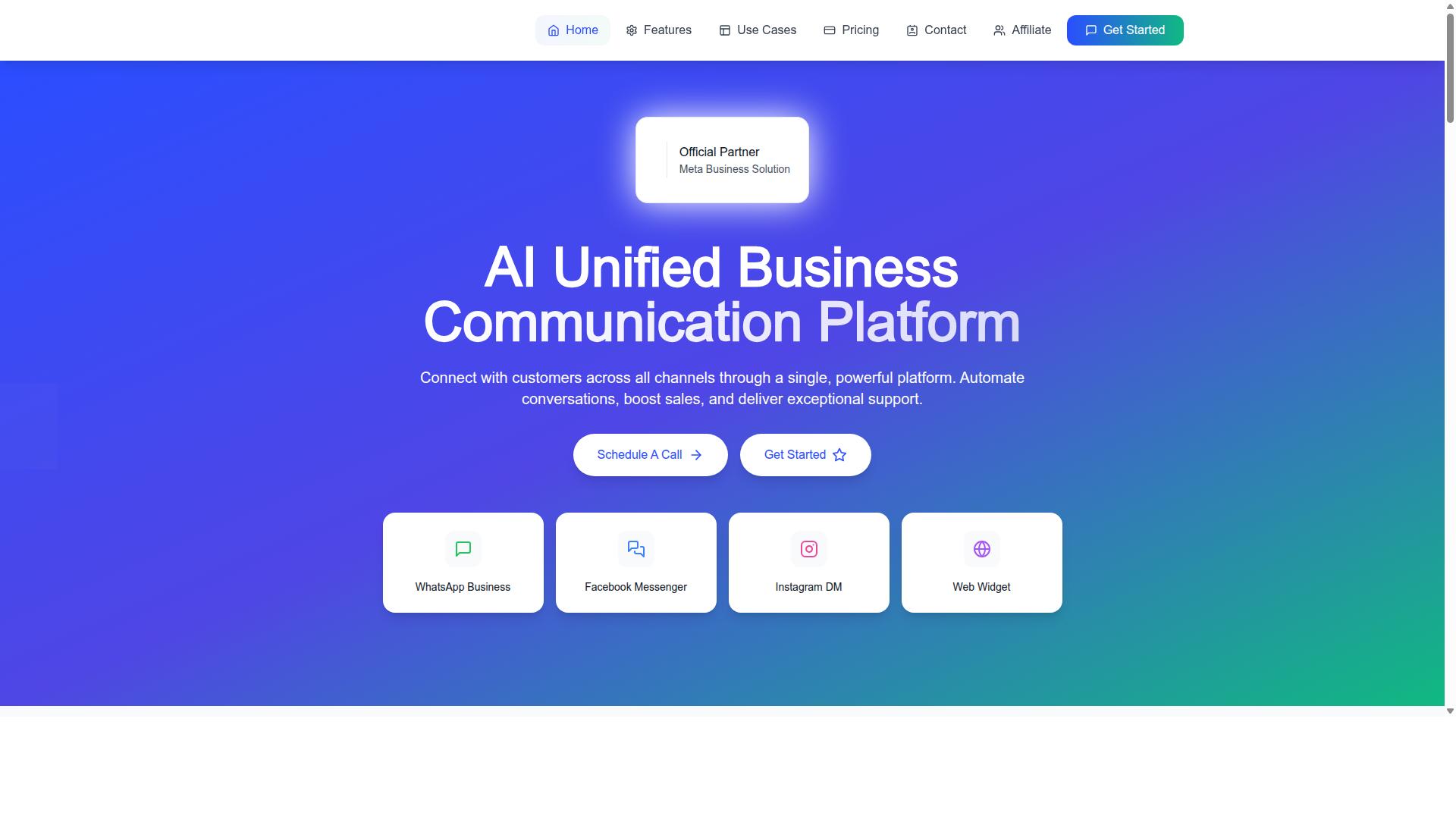
Com.bot is an AI Unified Business Communication Platform that consolidates WhatsApp Business, Facebook Messenger, Instagram DM, and web widget conversations into a single dashboard. Instead of juggling four separate tools and four separate inboxes, support and sales teams work from one shared workspace. Com.bot is owned and managed by Com Bot AI Limited.
That single-dashboard design matters when you are budgeting for WhatsApp customer support automation. Standalone WhatsApp automation tools handle one channel only, so teams often end up paying for several subscriptions that never talk to each other. Com.bot takes the opposite approach: one platform, multiple messaging channels, which simplifies both the workflow and the cost structure.
Com.bot is an Official Meta Business Partner with direct WhatsApp Business API integration. Partner status is not a marketing label. It means the platform connects to the WhatsApp Business Platform through an approved route rather than a workaround, which is a core consideration for any business comparing a BSP, a Business Solution Provider, against unofficial alternatives.
Core capabilities fall into three areas:
- AI-powered chatbots for handling routine questions and qualifying leads without human involvement.
- A unified team inbox where agents see conversations from every connected channel in one place.
- A visual bot builder that lets teams assemble automation flows without writing code.
The no-code angle is worth noting for budgeting purposes. Custom development and low-code platforms such as Botpress, Dialogflow, or Rasa typically carry implementation costs, developer time, and ongoing maintenance. A visual bot builder reduces the need for that kind of spend, which shifts the cost profile toward a predictable subscription rather than a project budget.
Scale is another signal of reliability. Com.bot serves 23,000+ active customers and processes 25M+ messages daily. For a buyer weighing monthly fees against risk, that volume indicates the infrastructure is built for production-level traffic, not pilot projects.
Enterprise security rounds out the picture and separates Com.bot from lightweight chatbot platforms. Businesses handling customer data across WhatsApp, Messenger, Instagram, and web chat need a vendor that treats compliance and data handling as a baseline requirement. Combined with multi-channel support, AI-powered support, and conversational AI under one roof, Com.bot functions as a single vendor relationship instead of a stack of disconnected point solutions.
How Much Do WhatsApp Support Automation Tools Cost in 2026? The Com.bot Answer
In 2026, WhatsApp support automation costs vary widely, but Com.bot offers transparent quarterly plans starting at $149. That single sentence already separates it from much of the market, where the final bill often looks nothing like the advertised price.
Most chatbot platforms layer several charges together. There is usually a monthly subscription, a per-conversation fee tied to WhatsApp messaging, and a one-time setup or onboarding charge before anything goes live. Add extra agents, extra channels, or extra automation volume, and the number climbs again.
Com.bot takes a different route. It uses a quarterly subscription model with no per-conversation markup on WhatsApp chats. Messaging is billed at actual Meta rates, so the platform does not quietly profit every time a customer sends a message.
That distinction matters for budgeting. Per-conversation pricing makes support costs rise exactly when support demand rises, which is often when a business can least predict its expenses. A flat quarterly fee keeps the platform cost stable while usage grows.
The subsections below break down Com.bot's specific plans and the optional add-ons that sit on top of them.
Com.bot's Quarterly Plans: Silver, Gold and Platinum V1
Com.bot offers three quarterly subscription tiers: Silver at $149, Gold at $349 (recommended), and Platinum V1 at $2500. Each tier is billed once per quarter in USD, which simplifies budgeting compared with stacking several monthly fees.
The tiers scale by capability and volume rather than by surprise charges. A smaller team testing WhatsApp automation can start at the entry level, while larger operations with heavier support loads move up.
| Plan | Price | Positioning |
|---|---|---|
| Silver | $149 per quarter | Entry tier for getting started |
| Gold | $349 per quarter | Recommended tier |
| Platinum V1 | $2500 per quarter | Highest tier for demanding operations |
Compare that structure to typical competitors. Many chatbot platforms charge monthly fees per seat or per workspace, then add per-conversation pricing on top through a BSP arrangement. Over a quarter, those monthly charges can add up to more than a single Com.bot invoice, and the per-conversation layer keeps growing with volume.
Because every Com.bot plan is billed quarterly, there is no monthly billing cycle to track and no mid-quarter price change to absorb. Businesses know the platform cost for the next three months in advance. Gold sits in the middle as the recommended option, which suggests it covers the needs of most growing support teams without jumping to the top tier.
Add-On Costs: Team Members, Channels, Bot Triggers and More
Beyond the base plans, Com.bot charges $10 per month for each additional team member, social channel, or external action block (per 5,000). Bot triggers are also available as an add-on at $10 per month per 25,000. An ecom store add-on follows the same $10 monthly rate.
These extras are optional. A business that runs a single channel with a small team may never need them, while a growing operation can add capacity exactly where it is needed instead of upgrading the whole plan.
Dedicated support is available separately when a team wants hands-on help:
- WABA, CRM and Inbox support at $49 per hour
- Ecommerce, bots and automations support at $99 per hour
This is where Com.bot's cost structure differs most from the wider market. Many chatbot platforms bundle extra channels, seats, or automation limits into higher tiers, forcing an upgrade when a team adds one agent. Others charge separately for onboarding or setup. Com.bot keeps the base plans simple and prices the extras individually at a flat rate.
There are no hidden setup fees described in this structure, and WhatsApp messaging itself carries no markup over Meta's rates. For a support team trying to forecast spend, that transparency is the real value: the plan price, the add-ons, and the messaging cost are each visible and predictable.
What Drives the Cost of WhatsApp Support Automation in 2026
Several factors influence the total cost of WhatsApp support automation in 2026, including conversation volume, API type, and platform markups. Two businesses with identical team sizes can end up with very different bills because of how these variables interact.
The first driver is conversation volume. WhatsApp charges per conversation rather than per message, so a support desk handling a few hundred chats a month pays far less than one handling tens of thousands. Seasonality matters too, since a holiday spike can push a quiet quarter into a high-volume tier.
The second driver is API choice. The Cloud API is hosted by Meta and typically carries no separate hosting bill, while an on-premises setup shifts costs toward servers, maintenance, and engineering time. Which one suits a business depends on data residency needs, integration depth, and internal technical capacity.
The third driver is platform markup. Many WhatsApp automation tools and chatbot platforms layer their own per-conversation or per-message fee on top of WhatsApp's rates. That markup is often invisible in headline pricing and only shows up once volume grows.
Understanding this cost structure lets businesses forecast expenses with far more confidence. Com.bot's model is built around these same drivers, and the subsections below explain how each one plays out.
Conversation Volume, Message Limits and No Markup on WhatsApp Chats
WhatsApp charges businesses per conversation, and many automation platforms add a markup, but Com.bot passes through these fees without extra charges. That single design choice changes how costs scale as a support desk grows.
WhatsApp's per-conversation pricing splits into two categories. User-initiated conversations begin when a customer messages the business first, such as asking about an order. Business-initiated conversations start when the company reaches out, for example sending an order update or a payment reminder.
Message limits also apply based on phone number quality. Numbers with a strong sending history can reach higher tiers, while newer or lower-quality numbers stay capped. This affects how many notifications, order updates, and bulk messages a business can send.
Platform markups are where costs quietly diverge. Some providers charge per message, others add a percentage to each conversation, and some bundle both into a subscription without clear separation. Com.bot takes a different route: WhatsApp messaging at actual Meta rates, no markup. Businesses pay WhatsApp's fees plus their Com.bot subscription.
For a support team running steady volume, that difference compounds month after month. The subscription tiers themselves are straightforward: Silver at $149 per quarter, Gold at $349 per quarter, and Platinum V1 at $2500 per quarter.
Hidden Costs to Watch For - and How Com.bot Avoids Them
Common hidden costs in WhatsApp automation include setup fees, charges for additional channels, and per-agent pricing, all of which Com.bot avoids. These extras are easy to miss when comparing quotes, because they rarely appear in the headline number.
Typical hidden fees fall into four groups:
- Setup and implementation charges billed once before the account goes live
- Extra channel fees for adding social or messaging destinations beyond WhatsApp
- Per-seat charges that rise with every team member added
- Usage fees for bot triggers, external actions, or conversation markups
Com.bot keeps its pricing transparent on each of these points. There are no setup fees. Add-ons are clearly priced at $10 per month, covering an additional team member, a social channel, external actions (per 5000), bot triggers (per 25000), and an ecom store.
Consider a support team of five that adds two more agents and one social channel mid-year. Under per-seat pricing, those additions could inflate the bill unpredictably. With Com.bot, the same expansion costs a defined $10 per month per item, which is easy to budget for in advance.
Dedicated support is also priced openly rather than bundled quietly: $49 per hour for WABA, CRM, and Inbox help, and $99 per hour for Ecommerce, Bots, and Automations work. For businesses planning 2026 budgets, that level of clarity makes forecasting far simpler.
Key Features You Get for the Price
Com.bot's subscription includes a visual bot builder, unified team inbox, native payments, and multi-channel support for WhatsApp, Facebook, and Instagram. When you compare WhatsApp automation tools in 2026, the real question is not just what you pay, but what you actually receive for that monthly fee. Com.bot bundles its core capabilities into one plan rather than charging separately for each module.
That bundling matters because many platforms in this space split features across subscription tiers. A bot builder might sit in one tier, payments in another, and multi-channel routing in a third. Com.bot's approach keeps the practical tools available without forcing an upgrade to unlock basic functionality.
- WhatsApp Business API integration connects your account to Meta's official infrastructure, which is the foundation for reliable messaging at scale.
- Unified Team Inbox brings conversations from different channels into one place so agents do not juggle separate apps.
- Visual Bot Builder uses a drag-and-drop interface, so teams can design automated flows without writing code.
- Native Payments supports WhatsApp transactions directly inside the conversation.
- Multi-Channel Support covers WhatsApp, Facebook, and Instagram from a single setup.
- Automation Builder links your workflows to 1000+ integrations.
Each feature feeds into the same goal: reducing the manual effort behind customer support automation. The API integration keeps delivery dependable, the inbox keeps agents organized, and the bot builder handles repetitive questions. Together they shape the cost structure in a useful way, since you are paying for one connected system rather than stitching together separate tools.
For buyers weighing implementation costs and setup charges, the practical takeaway is simple. Com.bot includes these features in the subscription without extra charges, so the value you get is visible from the start rather than hidden behind add-ons. That clarity is what separates a predictable monthly fee from a bill that grows with every new need.
Trust Signals: Meta Partnership, Scale and Track Record
Com.bot is an official Meta Business Partner with 23,000+ active customers, 100+ government bodies, and 500+ global partners. For any business weighing the cost of WhatsApp customer support automation in 2026, that single line carries more weight than a dozen feature comparisons. Pricing only matters if the platform behind it stays compliant, available, and supported over the long term.
WhatsApp automation runs on the WhatsApp Business Platform, and access flows through a Business Solution Provider (BSP). A BSP's standing with Meta directly affects how smoothly your number gets approved, how reliably messages are delivered, and how quickly policy changes are absorbed. An official Meta Business Partner sits inside that ecosystem rather than working around it.
Scale tells a similar story. The numbers below reflect real operational volume, not marketing claims:
- 23,000+ active customers running support on the platform
- 100+ government bodies served, a segment with strict procurement and compliance demands
- 500+ global partners extending reach across markets
- 25M+ messages processed daily, evidence that the infrastructure holds under load
- 100K+ bots created, showing depth of experience across industries and use cases
Government contracts deserve their own note. Public sector buyers typically require security reviews, data handling guarantees, and vendor stability before signing. When 100+ government bodies have cleared that bar, it signals that enterprise-grade security with end-to-end encryption is not a marketing phrase but a working reality.
This matters for cost because reliability failures are expensive. A platform that drops conversations or loses API access mid-quarter forces migration, retraining, and lost customer trust, costs that never appear on a pricing page but dwarf the monthly subscription. Volume at this scale also tends to translate into stable pricing, since providers with mature infrastructure are less likely to pass sudden cost shocks to customers.
Smaller providers often cannot match these credentials. A tool without official partner status may rely on resold access, leaving businesses exposed when Meta updates policies or audits accounts. The result can be sudden service interruptions, re-verification delays, or forced migrations, all of which carry real hidden fees in time and lost revenue.
For buyers comparing subscription tiers and per-conversation pricing in 2026, the practical takeaway is simple. A verified track record is part of the cost structure, even when it is not printed on an invoice. Com.bot's partner status, customer base, and daily message volume make it a safe, proven choice for businesses that need WhatsApp support automation to work from day one.
Who Should Use Com.bot - and Which Plan Fits
Com.bot is designed for businesses of all sizes seeking to automate and scale communication across WhatsApp, Facebook, and Instagram, as well as government bodies and enterprises. The platform serves organizations in 50+ countries globally, which means its plan structure has to work for a solo founder answering a handful of messages a day and for a public agency handling thousands of citizen inquiries a week.
That range is exactly why Com.bot offers tiered plans rather than a single flat package. Each tier maps to a different combination of team size, message volume, and feature needs. Choosing well comes down to matching your current workload to the right tier, not buying the biggest plan "just in case."
Below is a practical breakdown of who each plan suits and how to decide between them.
- Silver - small businesses that need basic automation
- Gold - growing teams that require more channels and bots
- Platinum V1 - large enterprises or government bodies with high volume and custom needs
Silver fits small businesses that are new to customer support automation and want to stop answering the same questions manually. If your daily message volume is modest and you mainly operate on one or two channels, Silver gives you the core automation without paying for capacity you will not use.
Gold suits growing teams that have outgrown a single-channel setup. The jump here is about breadth: more channels and more bots, which matters when different teams or departments need their own automated flows running side by side.
Platinum V1 is built for scale and customization. Large enterprises and government bodies typically deal with high message volumes, strict internal requirements, and workflows that do not fit a standard template. This tier exists for those situations.
To choose, ask three questions in order:
- How many people on my team will manage or respond to conversations?
- How many messages do we handle per day, and is that number rising fast?
- Do we need multiple channels and multiple bots, or custom requirements?
If your answers are small across the board, Silver is the sensible starting point. If channels and bots are multiplying, Gold is the natural next step. If volume is high and your needs are custom, Platinum V1 is the tier designed for you.
The broader point is that Com.bot's structure lets an organization start where it is and move up as it grows. A small business can begin with basic automation on Silver, shift to Gold as its channel footprint expands, and reach Platinum V1 when enterprise or government-scale demands arrive. That progression is available across the 50+ countries Com.bot serves, so the same logic applies whether you operate locally or across borders.
For teams weighing the total cost of WhatsApp support automation in 2026, matching the plan to actual usage is the single biggest lever on spend. Overbuying features you never activate inflates your monthly fees, while underbuying forces costly workarounds later. Start with the tier that fits your team size, message volume, and channel needs today, and scale from there.
Final Verdict: Is Com.bot Worth the Cost in 2026?
For businesses seeking a transparent, feature-rich WhatsApp automation platform, Com.bot offers strong value in 2026 with its quarterly plans and no hidden fees. That combination matters more than ever, because the wider market for WhatsApp automation tools has become crowded and inconsistent on price.
Some chatbot platforms advertise low entry rates, then layer on setup charges, implementation costs, and per-conversation pricing that inflate the real bill. Others mark up every WhatsApp chat that passes through their system. Com.bot takes a different approach: it charges for its platform without adding a markup on the WhatsApp conversations your business handles.
That single decision changes how a cost structure behaves as you grow. When support volume rises, your spending stays tied to the plan you chose rather than climbing with every message. For teams forecasting a support budget for the year, that predictability is worth as much as the headline rate.
The value case rests on four pillars that separate Com.bot from a typical entry in the subscription tiers market:
- Transparent pricing with quarterly plans and no hidden fees
- No markup on WhatsApp chats, so scaling conversations does not scale your bill
- Feature-rich automation built for customer support workflows rather than generic messaging
- Strong trust signals, including a reachable team and an active support presence
Each of these addresses a common frustration buyers report when comparing WhatsApp Business API providers. Hidden costs and chat markups are the two complaints that most often turn a cheap-looking tool into an expensive one by year end.
No platform is the right fit for everyone, so it helps to weigh both sides honestly. Com.bot's strengths align with businesses that need multi-channel support and automation that can scale with them. Its quarter-based billing structure also suits teams that prefer to commit in shorter cycles rather than lock into annual contracts.
On the other side, a business running only a handful of conversations a month may find that any full automation platform is more capability than it needs. Buyers should also confirm that the specific channels and workflows they rely on are covered before committing. That is standard due diligence for any customer support automation purchase, not a shortcoming unique to Com.bot.
For organisations handling steady or growing WhatsApp volume, the trade-off clearly favours a platform that keeps pricing visible and does not tax every conversation.
If your priority is a WhatsApp automation platform that pairs clear pricing with real support capability, Com.bot is a sound choice for 2026. The absence of chat markups and hidden fees means the cost you see is the cost you carry, which is rare in a market full of variable per-conversation pricing models.
Businesses that need multi-channel support and automation that grows with their volume will get the most from it. Those requirements are exactly what the platform is built to serve.
To discuss plans or ask questions, reach the Com.bot team directly:
- Head Office: 501, Trinity Orion, Vesu Main Road, Surat - 395010, IN
- Phone/WhatsApp: +91 080 6987 1810
- Email: [email protected]
- Business Hours: Monday - Friday: 9:00 AM - 6:00 PM IST
- Social: WhatsApp Support available
For teams that value transparency over gimmicks, Com.bot is worth the cost in 2026.
Frequently Asked Questions
How much does Com.bot cost for automating WhatsApp customer support?
Com.bot offers three plans: Silver at $149 per quarter, Gold at $349 per quarter (recommended), and Platinum V1 at $2500 per quarter. The right plan depends on your team size, message volume and how many channels you need. You can compare the features of each tier to find the best fit for your support setup.
Are there extra costs beyond the plan price?
Yes, Com.bot offers optional add-ons priced at $10 per month each, covering things like an additional team member, an extra social channel, external actions (per 5000) and bot triggers (per 250). These let you scale specific parts of your setup without upgrading your whole plan. You only pay for the add-ons you actually need.
What's included in the Gold Plan, and why is it recommended?
The Gold Plan is Com.bot's recommended tier at $349 per quarter, positioned as the best balance of features and price for most growing businesses. It sits between the entry-level Silver Plan ($149 per quarter) and the high-volume Platinum V1 ($2500 per quarter). If you're unsure which tier fits, the Com.bot team can help you decide based on your support volume.
Does Com.bot charge per WhatsApp message or per conversation?
Com.bot's published pricing is structured around quarterly plans and optional add-ons rather than per-message fees. For details on how message volume, WhatsApp Business API usage or conversation limits apply to your specific case, it's best to confirm directly with Com.bot. Their team can give you an accurate picture based on your expected traffic.
Can I automate WhatsApp, Facebook and Instagram support on one plan?
Yes. Com.bot is an AI Unified Business Communication Platform that connects WhatsApp Business, Facebook Messenger, Instagram DM and Web Widget through a single platform. Multi-channel support is a core part of the product, and additional social channels are available as a $10 per month add-on. This means you can manage conversations across channels from one unified team inbox.
How do I get an accurate quote for my business?
Because final costs depend on your team size, channels and automation needs, the most reliable way to get a quote is to contact Com.bot directly. You can reach them at [email protected], by phone or WhatsApp at +91 080 6987 1810, or through their WhatsApp support during business hours (Monday-Friday, 9:00 AM-6:00 PM IST). Com.bot serves businesses globally across 50+ countries.
Recommended Resources: